Tower Bridge introduction
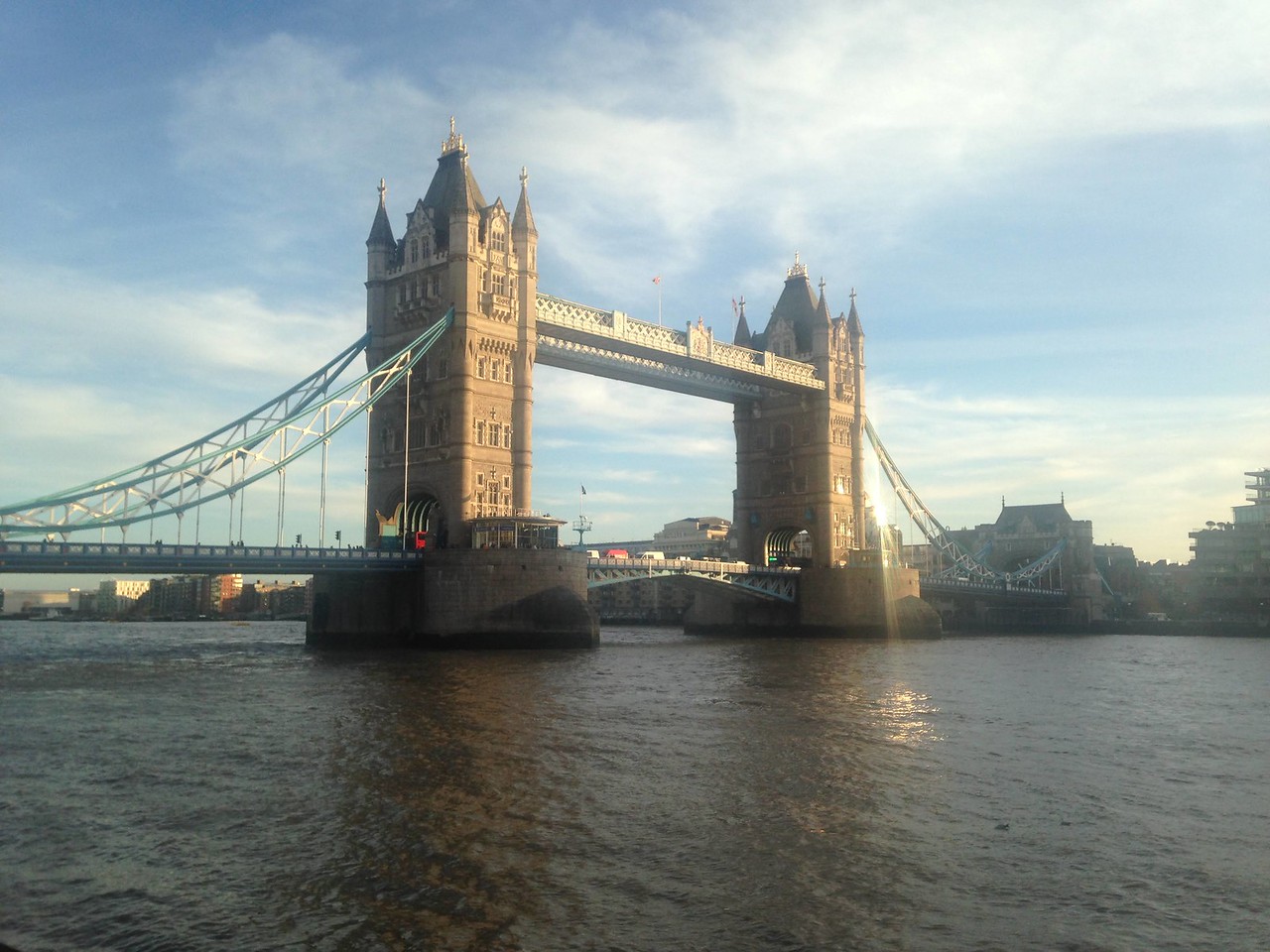
The Corporation of London built the bridge to ease traffic around the current London Bridge area. To explain, London Bridge was the furthest bridge downstream and a bottleneck for those wishing to traverse the river approaching from the East. Unfortunately, there was a problem in that large ships still needed to access the docks beyond the proposed bridge.
The eventual design was a bascule bridge, where a weight counterbalances the bridge’s span. The advantage is that bascules require a relatively small amount of energy to manoeuvre. The original build used steam power but not to raise the bridge itself. The steam engines’ energy lifts a heavy piston that stores the energy.
The operation is similar to the topping up of a rechargeable battery. Raising the bascule, the bridge engineer will allow the piston to drop under gravity, providing the necessary energy. A “full charge” in the piston would have the energy the accommodate many raise/lower cycles.
Another notable fact is that the bridge’s main structure is iron. The towers’ familiar stonework is purely decorative and not structural. It is merely cladding bolted onto an iron skeleton.